Our Approach

We build the foundations,
not just the facts.

MindFlow Academy helps children ages 3–9 build emotional intelligence and thinking skills during the brain's most flexible years — through play, real art, and hands-on science.

Why I built this

Why I built MindFlow
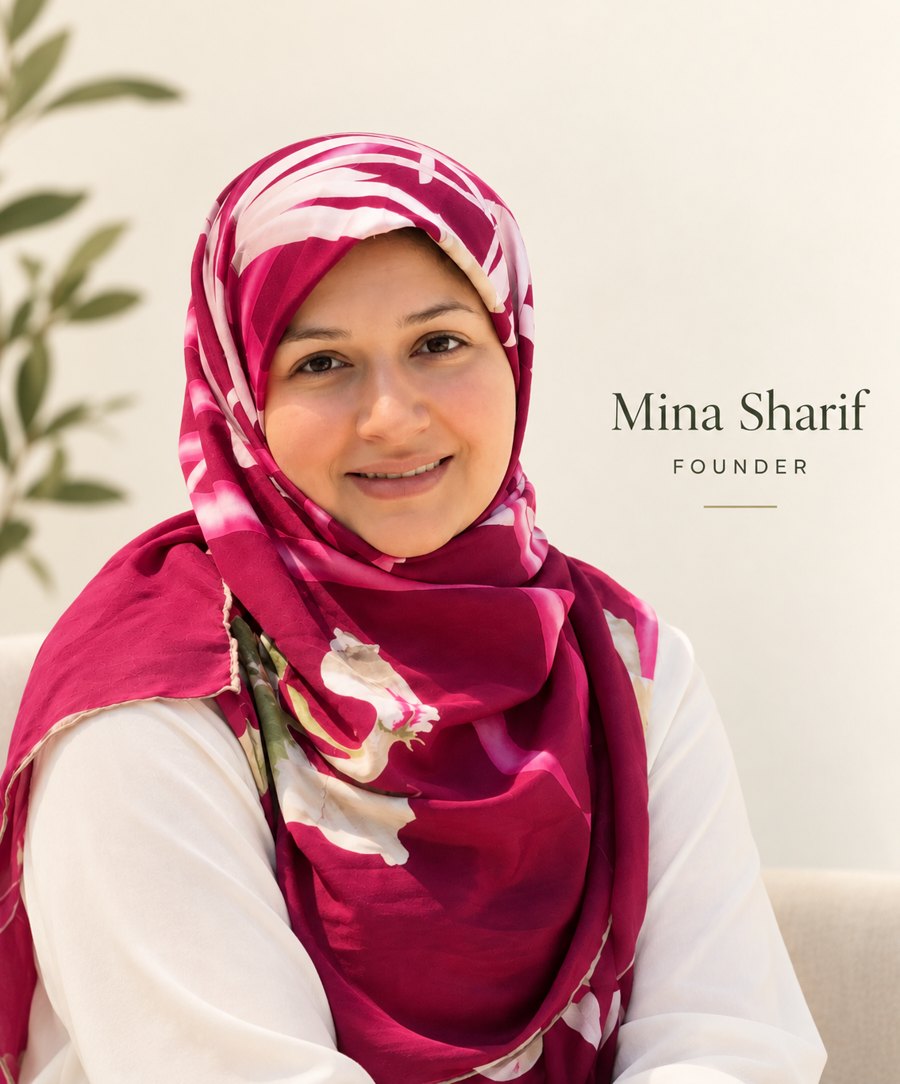
Mina Sharif, Founder of MindFlow Academy

I’ve always wondered why.

Why, in a world where we are more connected than ever, do we still find so many ways to divide ourselves? Why can another person’s pain feel distant simply because their life, their story, or their group is different from ours?

I studied psychology because I wanted to understand where that distance begins. And somewhere along the way, my question changed. Instead of asking only how we repair division, I began asking:

What if we could raise a generation that never becomes quite so comfortable with it?

Children who know themselves deeply enough that difference doesn’t threaten them. Who can disagree without dehumanizing. Who can belong without needing someone else to be outside. Who can look beyond a label, a group, or a first impression — and remain curious enough to see the human being underneath.

That question became MindFlow.

We begin small: with a feeling, a story, a disagreement, a game, a moment between two children. But we are building toward something much bigger — a future where connection is stronger than division. Where difference doesn’t erase belonging. Where humanity comes first.

And we don’t want to leave that future to hope. We want to do the work that helps build it. One child. One classroom. One community at a time.

This is a journey we have already begun — and we would love to have you on board.

— Mina Sharif

Founder, MindFlow Academy · BSc Psychology · Stanford Medicine (Child Development) · MSc Psychology & Neuroscience (in progress), King’s College London

Why The Early Years

The golden window is now.

Between the ages of 3 and 9, a child's brain is at its most flexible — forming connections faster than at any other time in life. The habits of feeling and thinking that take root now tend to last. That is why we start early: it is far easier to build strong foundations than to repair them later.

Children are not simply born anxious, confident, kind, or reactive. A quiet inner belief — "I can't do this," "I'm not safe," "people won't like me" — shapes the thoughts that follow, and those thoughts shape feelings and behavior. So instead of only managing the behavior we see, we gently work upstream, at the level of belief and thought. When a child's inner story becomes kinder and more flexible, calmer feelings and better choices follow naturally.

Where We Gently Step In
How Beliefs Become Behavior
Belief
Thought
Feeling
Behavior

We help children notice and reshape the belief and the thought — so healthier feelings and behavior follow on their own, instead of being forced from the outside.

A brain built to change
In the early years the brain rewires itself with practice. Every time a child names a feeling, takes a breath, or tries again, they are literally strengthening the pathways they will use for the rest of their lives.
Kind inner stories
A child who believes "mistakes help me learn" behaves very differently from one who believes "I have to be perfect." We help children build inner stories that make room for effort, curiosity, and self-kindness.
Calm before the storm
Young children often react before they can think — the emotional brain moves faster than the reasoning one. We teach the pause between feeling and action, so children learn to respond instead of simply reacting.
Foundations that last
Emotional intelligence learned early becomes second nature. Rather than teaching children what to think, we help them learn how to feel, understand, and choose — skills that grow with them for a lifetime.
What Sets Us Apart

Six things we do differently.

Emotional intelligence, real creativity, and genuine curiosity — woven together into one thoughtful program.

1
The golden window
We begin at ages 3–9, when the brain is most flexible and open to change. Starting early means we are building strong foundations at exactly the moment they take hold most easily.
2
Emotional intelligence as the spine
Self-awareness, calming down, empathy, and problem-solving are not a separate subject for us — they run through everything a child does, from an art project to a science experiment to a moment of conflict.
3
Real art, museum-style
Children meet real artists — Frida Kahlo, Picasso, Matisse — the way a MoMA or children's-museum studio does it: "How did they make this? Now you try." More than 25 hands-on techniques, never repeated twice.
4
Hands-on science every month
Real exploration, not memorized facts: does it sink or float? What happens when colors mix? How does a seed become a plant? How do we make things balance? Curiosity is a skill, and we practice it often.
5
We teach children how to think
Not what to think — how. Children learn to see the whole picture, weigh options, predict what might happen next, and then choose. Systems thinking and decision-making, made playful and age-appropriate.
6
Growth you can measure
A structured spiral curriculum with real observation and progress tracking — benchmarked against the world's leading SEL programs. Parents don't just hope their child is growing; they can see it.
Our Mission
We catch children before the fall —
and show them how to rise.

MindFlow Academy exists to give every child a strong emotional and thinking foundation during the years it matters most. Through play, real art, and genuine curiosity, we help children understand themselves, understand others, and grow into flexible, resilient, kind human beings.

Be part of the journey
Understand themselves
Children learn to notice what they feel, name it, and calm it — the first step toward every other skill.
Understand others
Empathy and perspective-taking help children build real friendships and move through the world with kindness.
Grow with confidence
With a growth mindset and flexible thinking, children learn that effort matters and mistakes are how we learn.